
What to Expect on the Day of Your Medical Flight
Once planning and booking are finished, medical flight day- of is next: the actual day of transport.
Knowing what to expect on a medical flight ahead of time, from the itinerary email the night before to the air ambulance flight experience itself, makes the day easier for everyone involved. It's similar to any other flight in many ways, but what happens on an air ambulance differs from a typical commercial trip in a few important ways.
A dedicated medical flight coordinator is assigned to every flight and stays available to answer questions throughout the process.
.avif)

The Night Before: An Email with the Full Medical Flight Itinerary
The night before your medical flight, you (the contact person identified in the planning and booking process) will receive an email with the specific planned itinerary for the next day.
It will specify things like:
- The origin airport
- The destination airport
- Assigned flight number
- Assigned tail number for tracking
- Passenger information (for both the patient and an accompanying loved one, if applicable)
- Sending medical facility information, including phone numbers, room numbers, and expected arrival and departure times for the medical flight team
- Receiving medical facility information, including phone numbers, room numbers, and expected arrival and departure times for the medical flight team
- Crew names, including nurse(s), paramedic(s), captain & first officer
Things can change rapidly, so please make sure to call us as soon as possible if there is any important change in the patient’s condition. We strive to ensure every patient is safely transported with a high level of care, so want to prepare for any changes.
The Day Of: Medical Flight Team Arrival at Origination Facility
When it’s the day for the medical flight, the medical flight team will arrive at the origination facility to begin the beside-to-bedside care. The medical flight team will meet the patient to be transported, and meet with their care team to ensure there is continuity of care and understanding of the patient’s needs.
The medical flight team will take the patient to a waiting ambulance (which Angel MedFlight arranges as part of the medical flight transfer) and then drive to the origination airport.
Every medical flight through Angel MedFlight is a private jet medical flight, which means the flight is there expressly for you. There is no standard airport security to go through. Due to the medical configuration of the air ambulance airplane, baggage can be more limited than you may be used to with commercial flights. Our team will discuss our baggage policy with you before the flight so you know which bags you can and cannot bring. Please know that due to government regulations, all passengers in the US need a REAL ID compliant ID.
The patient in the ambulance (or other arranged medical transportation) will go directly to the airplane at the origination airport.
The medical flight team will help the patient board the aircraft and get situated. Most of the time, the patient being transported is on a stretcher for safe transport.
As soon as the patient is loaded, comfortable, and ready to go, the aircraft will begin the flight.
.avif)
What Happens During a Medical Flight
Once the patient is situated, the aircraft begins standard taxiing. Just like on a commercial flight, there can be a short wait for the runway, though medical flights typically depart from smaller, regional, or private-jet-focused airports with less traffic, so the wait is usually brief to none.
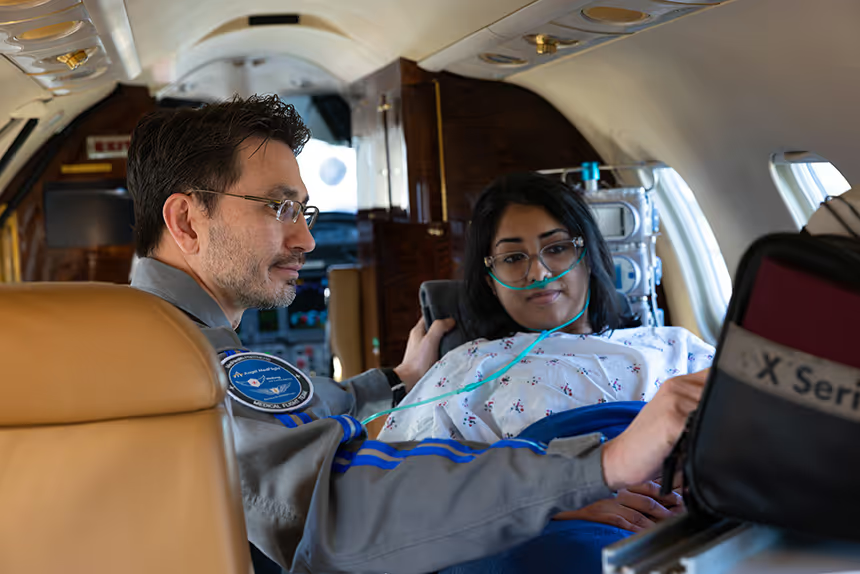
Once airborne, the aircraft is set up like a mobile ICU. Cardiac monitors, ventilators, and infusion pumps are built into the cabin rather than carried on as extras, and monitoring covers more than a single vital sign: heart rhythm, oxygen levels, and blood pressure are tracked continuously, along with carbon dioxide levels in each breath for patients who need it.
The medical crew adjusts care throughout the flight the same way they would on the ground, whether that means titrating medication, managing a ventilator setting, or responding to a change in heart rhythm. Certain conditions call for adjustments to cabin altitude and pressure, which the crew builds into the flight plan before departure rather than reacting to once airborne.
What the flight actually feels like depends on whether the patient is sedated or awake. A conscious patient usually notices engine noise and motion more than turbulence, since small medical jets tend to fly a smoother, more controlled profile than a typical commuter plane. The crew talks the patient through what's happening as they go, the same way they would at any other point of care.
The flight crew handles the aircraft; the medical crew handles the patient, and the two stay in contact throughout. If the patient's condition changes mid-flight, the medical crew communicates directly with the receiving facility, so the team on the ground is ready for whatever the patient needs on arrival. On longer flights that include a refueling stop, patient care continues without interruption, the same medical crew stays with the patient the entire time, on the ground and in the air.
If a family member is flying along, they stay seated and buckled in for the flight, much like on any small aircraft, and the crew explains what's happening in the cabin along the way. Anyone not flying along receives information on how to track the flight's progress in real time online. The FAQ page covers the specifics on who can accompany the patient.
Once the plane lands at the destination facility, the disembarkation procedure begins.
Medical Flight Teams Take the Patient to the Destination
Once the flight has landed, what happened at the origination will happen again – just in reverse. The patient will typically be situated in an ambulance, driven to the receiving Center of Excellence, and the Medical Flight team will assist with the check-in procedures.
They’ll inform the receiving care team of any important details of the patient’s condition and help the patient get situated. At that point, care will transition to their new medical team at the destination Center of Excellence.
With over 35,000 completed medical flights, Angel MedFlight has the experience you can trust to safely transport you or your loved one. Our supportive team is available 24/7 to help you understand your options, your insurance, and the best path forward. Give us a call now.
Find out what to expect when you call to arrange a medical flight.

Frequently Asked Questions
Air Ambulances Ready When You Need Us
For immediate assistance, flight coordination, or questions about our services, contact us anytime. Our experienced team is available around the clock to help with urgent medical transport needs.